
Mental Health and Wellbeing at Leamington Community Primary School
Mental Health and Wellbeing at Leamington Community Primary School
At Leamington Community Primary School, mental health and emotional wellbeing are at the heart of everyday school life. We want every child to feel safe, valued and heard, with the support they need to learn, grow and thrive. Our values of Respect, Friendship, Determination, Courage and Honesty guide our relationships and help us create an inclusive, caring school community.
Children’s voices matter. We give pupils meaningful opportunities to share their views, talk about their experiences and help shape school life. By working closely with families and community partners, we build positive relationships and a sense of belonging. Mental health is part of everyday life. We all experience different feelings, and everyone needs support sometimes. Through positive relationships, learning and early help, we support children to understand their emotions, build confidence and ask for help when they need it.
Supporting mental health and wellbeing helps children to:
- Feel connected to school and ready to learn.
- Recognise and communicate their feelings.
- Build friendships and develop social and emotional skills.
- Manage challenges with appropriate support.
- Grow in confidence, independence and resilience.
- Know when, where and how to ask for help.
Our whole-school approach brings together teaching, pastoral care, family partnerships and early support. Through weekly wellbeing and PSHE lessons, daily interactions and wider experiences, children learn to understand their emotions, explore strategies for managing them and care for themselves and others. We recognise that every child is different and adapt our support to their individual needs.
Positive, trusting relationships underpin this work. Our staff take time to listen, notice concerns and respond with care, helping children understand that all feelings are valid and that asking for help is a strength.
At Leamington, wellbeing is woven into how we learn, how we connect and how we care for one another.
Worried about your child?
Please speak to your child’s class teacher or contact the school office and ask for Ashley Belger, our Mental Health Lead.
Telephone: 0151 284 7848
Email: office@leamington.liverpool.sch.uk
You do not need to wait until a concern becomes serious. Whether your child is experiencing friendship difficulties, worries, changes at home or difficulties managing feelings, we can listen and discuss the next steps together.
Please telephone the office for concerns requiring a response during the school day.
How we support wellbeing in school
Our approach brings together teaching, pastoral care, family support and specialist services when needed.
Children have opportunities to:
- Learn about feelings, relationships and healthy choices through our Jigsaw PSHE curriculum.
- Recognise and communicate emotions through regular check-ins.
- Develop strategies for managing feelings, with support from trusted adults.
- Enjoy movement, outdoor play, creativity, clubs and enrichment.
- Build friendships, practise kindness and develop a sense of belonging.
- Share their views through pupil questionnaires, class discussions and School Council.
We adapt support to children’s ages, communication preferences and individual needs, including special educational needs and disabilities.
Understanding and managing feelings
We use the Zones of Regulation to help children recognise feelings and explore strategies that may help them.
All feelings are valid, and no zone is “bad”. Children are supported to understand that feelings and actions are different: it is okay to feel angry, worried or upset, and adults can help them respond safely. Depending on the child, support might include movement, a quieter space, breathing activities, sensory resources or time with a trusted adult. Children may need an adult’s reassurance and support before they are ready to talk or solve a problem.
The right support at the right time
We use a graduated approach, reviewing support with children and families as needs change.
- Everyday support and early identification: Positive relationships, PSHE lessons, check-ins and noticing changes in a child’s wellbeing.
- Additional school support: Individual check-ins, mentoring, nurture activities or small-group work focused on an identified need.
- Support from partner services: Advice, assessment or targeted support from appropriate professionals, including the Mental Health Support Team.
- Specialist support: Working with health professionals and specialist mental health services where a child needs more detailed assessment or treatment.
Children do not have to complete each level before receiving more specialist help. Support depends on their needs and the urgency of the concern.
Working with Alder Hey’s Mental Health Support Team
We work with Alder Hey’s Mental Health Support Team and our linked Education Mental Health Practitioner (EMHP) to strengthen support for children, families and staff. This partnership can include workshops about emotions, anxiety and transitions, advice for staff and parents, and targeted support where appropriate. Please contact our Mental Health Lead to discuss what is currently available. Access to individual or group support depends on assessed needs and the service’s referral criteria.
Working together with families
Parents and carers know their children best. We value your observations and want to work alongside you. Our pastoral and Inclusion Team brings together staff with responsibilities for wellbeing, safeguarding, SEND, family support, mentoring and attendance. We work together to understand concerns and coordinate appropriate help. Our Family Support Worker can also help families explore practical difficulties that may affect wellbeing, including routines, food, housing and access to community services.
Please ask the office about current parent workshops, courses, drop-ins and family activities.
Supporting wellbeing at home
Small, regular moments of connection can help:
- Make time to listen without rushing to solve the problem.
- Help your child name feelings: “It sounds as though that felt worrying.”
- Keep routines as predictable as possible, especially around sleep.
- Make time for play, movement and activities your child enjoys.
- Talk about online experiences and agree manageable digital routines.
- Let your child know which trusted adults they can speak to.
If changes in feelings or behaviour persist, worsen or affect everyday life, speak to school and seek advice from your GP.
Listening to children and reviewing support
We use pupil voice, family feedback and staff observations to understand what is working and where we need to improve.
When children receive additional support, we review their progress and next steps together. Our aim is for children to feel heard, know where to find help and develop strategies that work for them.
Helpful information and services
Local mental health support:
Liverpool CAMHS Partnership
Information about local emotional wellbeing and mental health services for children, young people and families.
Sefton and Liverpool mental health referral portal
An online route to request support. The service will consider the information provided and identify appropriate next steps. If you have difficulty using the form, school or your GP can help you explore other routes.
Advice for parents and carers
YoungMinds Parents Helpline
Free advice for parents and main carers worried about a child or young person’s mental health. Call 0808 802 5544. Check the linked page for current opening hours and contact options.
NHS advice for parents
Information about children’s feelings, anxiety, anger, bereavement and other mental health concerns.
Support for children and young people
Childline
Children and young people can talk about anything worrying them. Call free on 0800 1111, or visit the website for online support.
Ask Sam
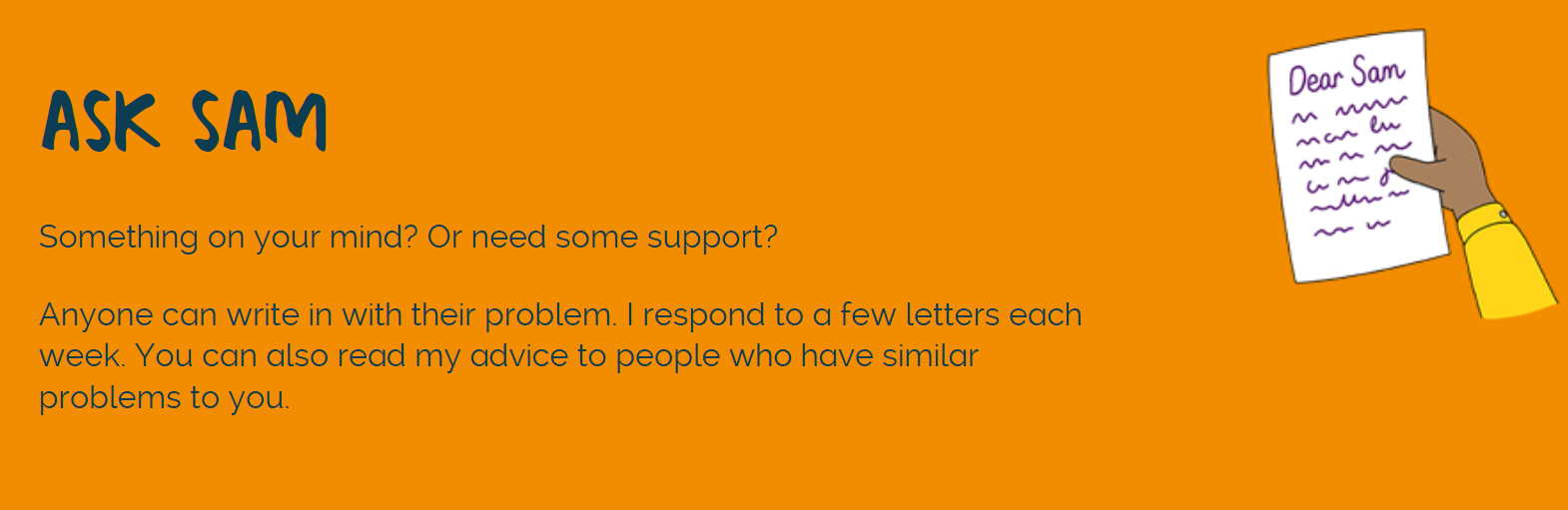
Children can read advice or send a letter about a worry. Only selected letters receive a public reply, so this should not be used when a child needs an immediate or private response.
Soluna by Kooth
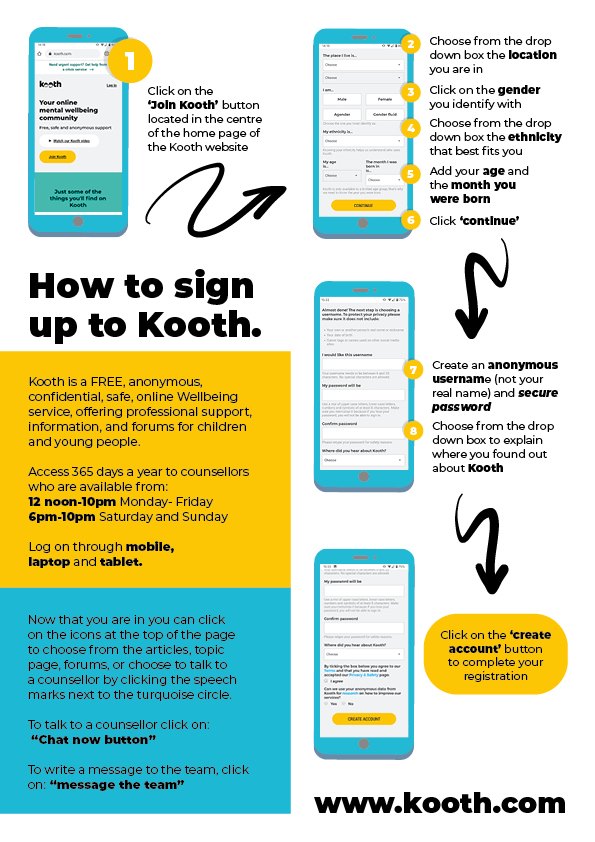
Free online mental wellbeing support for young people aged 10–25 in Liverpool. Children aged 10–12 should use the web version. Check the service website for eligibility and current support options.
Team around the child approach
We also have a strong pastoral support and inclusion team that meets every fortnight to ensure our children’s needs are being meet. The inclusion includes:
- Deputy Head teacher
- Designated Safeguarding Lead (DSL)
- SENDCo
- Assistant SENDCo
- Mental Health Lead
- Learning Mentor
- Family Support Worker
- Attendance Officer
- Wellbeing Governor
These members of staff engage with identified pupils and work to develop positive mental health strategies to support our children as well as work closely with other agencies in Liverpool to bring about better outcomes for our pupils. At Leamington we offer the four levels of support as identified below:
Leamington Community Primary School – Whole School Approach
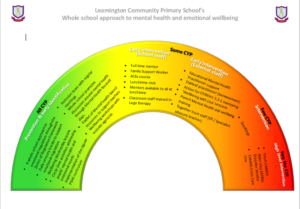
Prevention and early identification
We help children develop an understanding of their feelings, build positive relationships and know where to turn for support. Our everyday provision includes:
- Daily Zones of Regulation check-ins, helping children recognise and communicate their feelings.
- Jigsaw PSHE lessons, exploring emotional wellbeing, relationships and healthy choices.
- Sensory and movement breaks, adapted to children’s individual needs.
- Stories and discussions about mental health, encouraging children to explore emotions and ask for help.
- Staff training, supporting adults to recognise concerns and respond sensitively.
- Parent and carer workshops, sharing practical ways to support wellbeing at home.
- Workshops delivered by partner agencies, responding to the needs of our pupils.
- Access to lunchtime mentors, providing reassurance and opportunities to talk.
Early support from school staff
When a child needs additional help, we work with them and their family to understand their needs and agree appropriate support. This may include:
- Regular Inclusion Team meetings to discuss concerns, coordinate support and review progress.
- Support from our pastoral team, including staff responsible for safeguarding, mental health, SEND, mentoring, attendance and family support.
- Small-group programmes, such as resilience groups, Socially Speaking, Talkabout and Primary Anxiety, where appropriate.
- Individual mentoring, tailored to a child’s emotional, social or wellbeing needs.
- Lunchtime nurture provision, offering a supportive environment to build confidence and friendships.
- Support for families affected by adverse childhood experiences (ACEs), including access to relevant courses and advice.
We review support regularly, listening to the child and their family and adapting our approach as needed.
Support from external agencies
Where children need further support, we work with relevant professionals and services. Depending on assessed needs, referral criteria and current availability, this may include:
- Together Trust professionals, including occupational therapy and specialist advisory support.
- Education Mental Health Practitioner (EMHP) support, through our partnership with Alder Hey’s Mental Health Support Team.
- Targeted wellbeing sessions for individuals or small groups.
- Action for Children mentoring.
- Bereavement support, including Oakleaf where available.
- Beautiful New Beginnings programmes and family support.
We work alongside families to explain referrals and help coordinate support between school and other services.
Specialist mental health support
Some children need specialist assessment or treatment. We work with families and health professionals to support access to appropriate services, including:
- Child and Adolescent Mental Health Services (CAMHS) at Alder Hey.
- Alder Hey’s specialist eating disorder service, where appropriate.
- Urgent mental health assessment and crisis support, when needed.
Children can access the level of support their needs require; they do not have to work through every stage first.
Support for parents and carers
Supporting a child’s wellbeing starts with listening to and supporting their family. We offer opportunities to connect, learn and access practical advice. Depending on current availability, these include:
- Zones of Regulation workshops, led by the SENCo and Mental Health Lead, to explore feelings and emotional regulation at home.
- Mental health awareness and training opportunities, including Mental Health First Aid courses where available.
- Intergenerational cookery sessions, bringing children and families together.
- Links with My Clubmoor, including parent classes and community activities.
- Baby Book Club, encouraging early enjoyment of books and connection with other families.
- Wellbeing mornings, offering a welcoming space to talk and find support.
- Individual guidance from our Family Support Worker, including help to access other services.
Please contact the school office to find out about current activities or discuss support for your family.
For more information see the key documentation below:
- Leamington CPS Whole school approach
- Mental Health and Wellbeing Policy 2025 2026
- PSHE Jigsaw-Whole School Overview
- Leamington Parent Wellbeing Guide
Useful websites
Whether you’re concerned about yourself or a loved one, these helplines and support groups can offer expert advice.



Need urgent help?
If someone is in immediate danger or there is a life-threatening emergency, call 999 or go to A&E.
For urgent mental health support in Liverpool or Sefton, call NHS 111 and select the mental health option.
Read Alder Hey’s urgent mental health support information
School messages and the online referral form should not be used for emergency help.
Other links you may find useful: